



Basics of Circuit Breakers
I recently wrote an article about circuit breakers and some considerations for choosing a particular model of breaker. No matter how good of a design a device has, it will still be subjected to events that are out of the control of the engineer. From lightning strikes to short circuits, circuit protection can save a lot of money. There are many different kinds of over current situations that can happen, and some are necessary like an inrush current on a motor. Different types of circuit breakers are better for different applications. The article explores three different types of circuit breakers, some of the terminology that is used in industry, and where to find these on the DigiKey website.
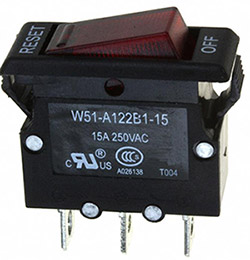
The different kinds of circuit breakers that are covered are:
Magnetic
- Not temperature sensitive
- Voltage sensitive – can’t cross DC model with AC model
- Uses magnetic field to actuate a solenoid to trip breaker when too much current is present
Thermal
- Temperature sensitive
- Not voltage sensitive – can cross a DC model with an AC model
- Uses bimetallic strip to sense temperature change caused by current
Solid State
- Replace bimetallic strip and solenoid operation
- Use current sensor and microprocessor or microcontroller to monitor
- Much faster response time
- More expensive
Acerca de este autor
 Pat Sagsveen, Asociado en Ingeniría de aplicaciones en DigiKey, brinda asistencia a los clientes para que puedan encontrar mejores maneras de utilizar nuevas tecnologías y piezas para completar sus proyectos. Se unió a DigiKey en 2016 después de obtener su título como Asociado en Ciencias Aplicadas, especializado en electrónica y comunicaciones de Bismarck State College. Su pasión son los amplificadores y dedica gran parte de su tiempo libre a construir y arreglarlos, incluso construyó amplificadores de 3 tubos para guitarra.

Have questions or comments? Continue the conversation on TechForum, Digi-Key's online community and technical resource.
Visit TechForum